Knife-making workshop
About 1.5 hours: choose a blade, sharpen it, engrave the handle and take home a standard multi-purpose knife in gift packaging with a custom key-holder. Larger knife types cost extra.
See open dates ↗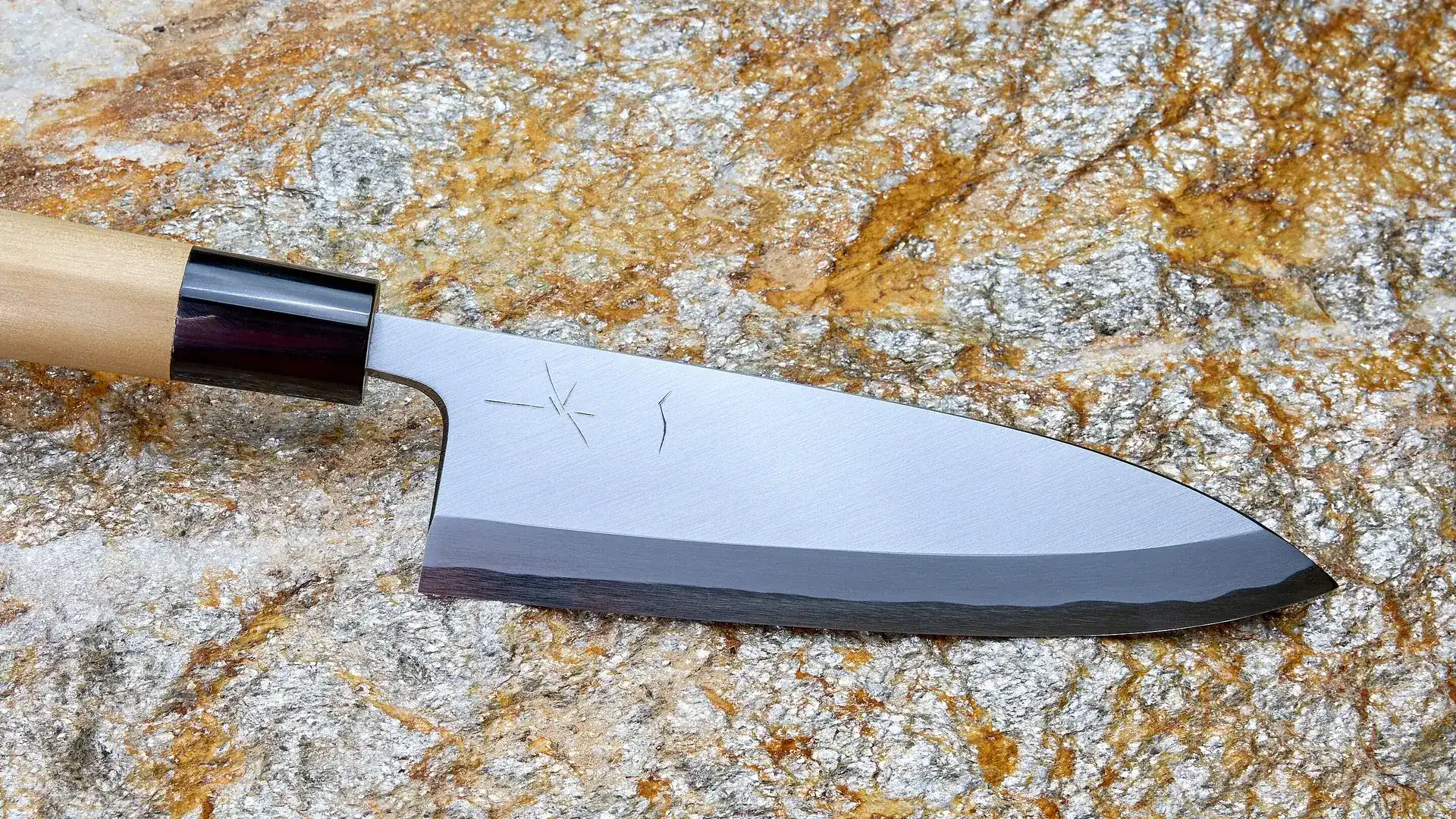
Japanese knife workshop · Tokyo
Whet the blade on a stone, seat the handle with a traditional hammer and leave with a boxed knife.
Likely to sell out, and easy to see why: you walk out with a blade you finished and engraved yourself.
The workshop in four facts
From blank blade to boxed knife
How the workshop unfolds at the bench, from the first choice to the knife in your hands.
Blade types beyond the standard knife cost extra, and the starting times for your date appear once you check availability.
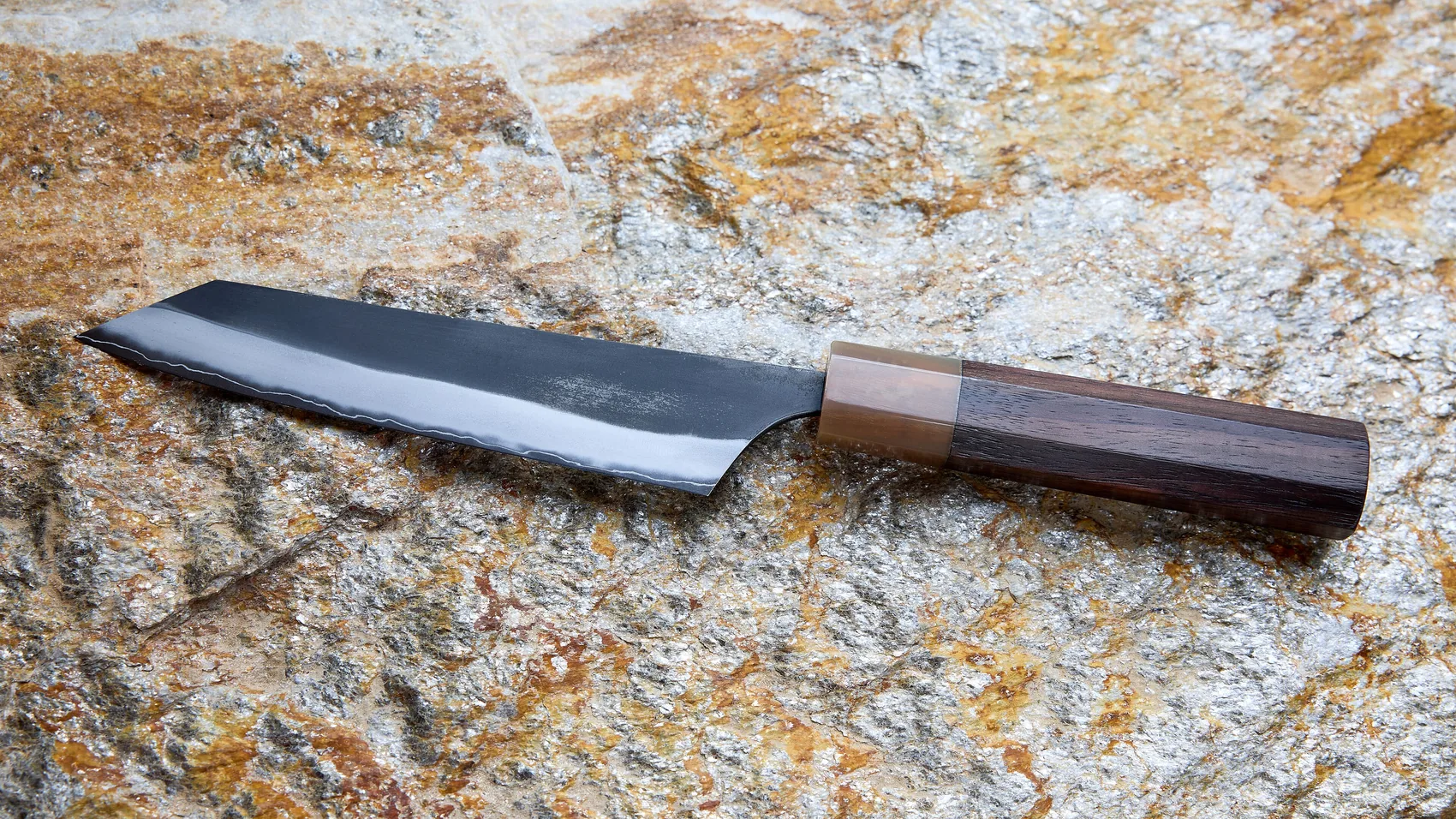
Settle in with tea or juice while a Japanese master explains the history of knives and swords. Then pick a blade type and size from up to five; the standard multi-purpose knife is the one included.
A light haori jacket protects your clothes and a name badge is written for you in Japanese letters. Then comes the stone: slow, repetitive work that rewards concentration and tends to quiet the mind.
English-speaking crew stay at your elbow, correcting your angle and chatting while the edge comes up, with advice tailored to how you are doing.
Cut sakura leaves or your name in Japanese letters into the handle. A picture or anything else you can imagine is welcome too, and the crew will teach a few Japanese basics if you ask.
The handle goes on with a traditional hammer, and the knife is packed in its gift box with Japanese snacks and tea to finish. A custom key-holder comes as a present.
About ninety minutes after you sat down, you leave with a knife you sharpened, engraved and fitted yourself.
The craft
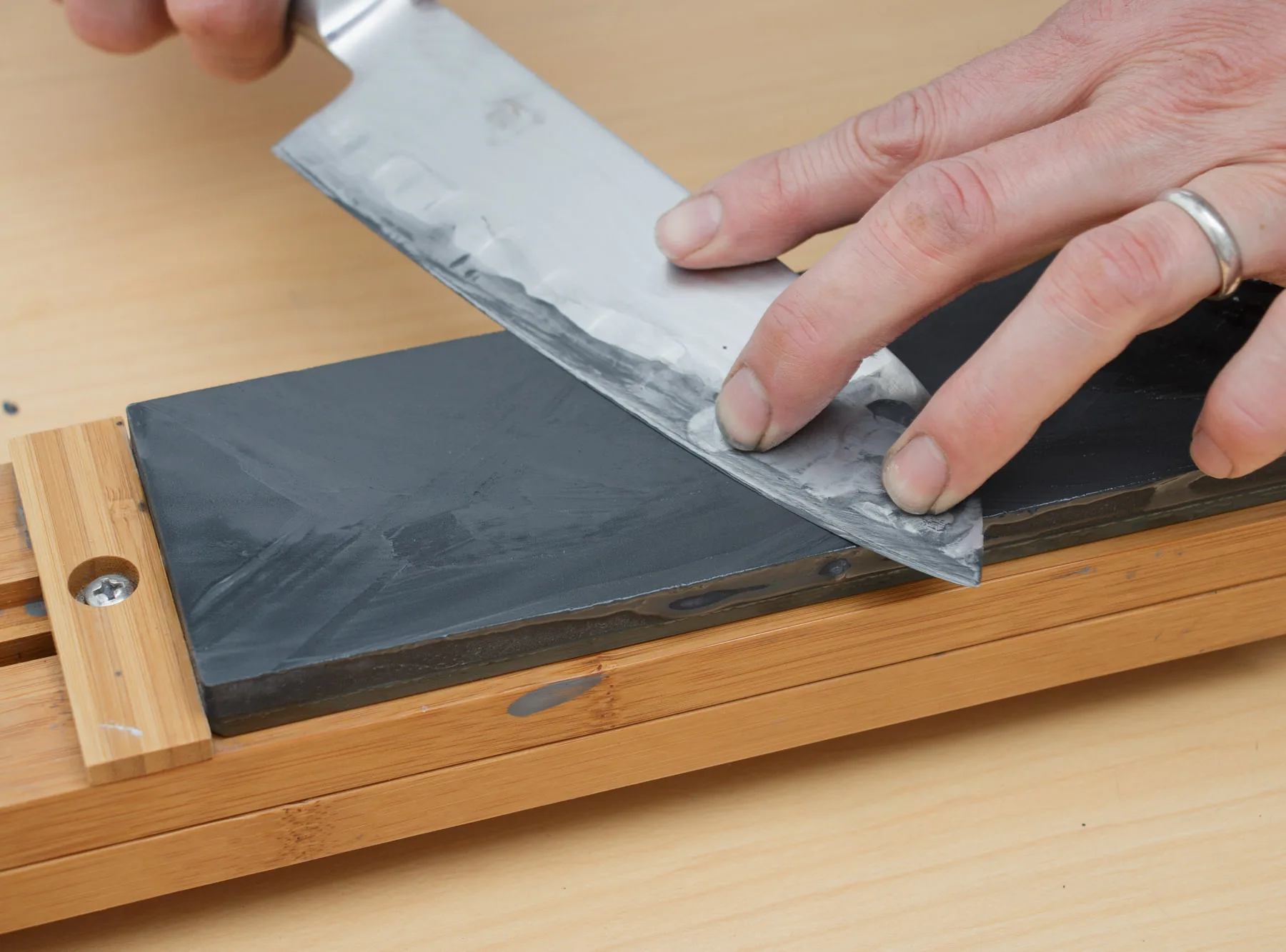
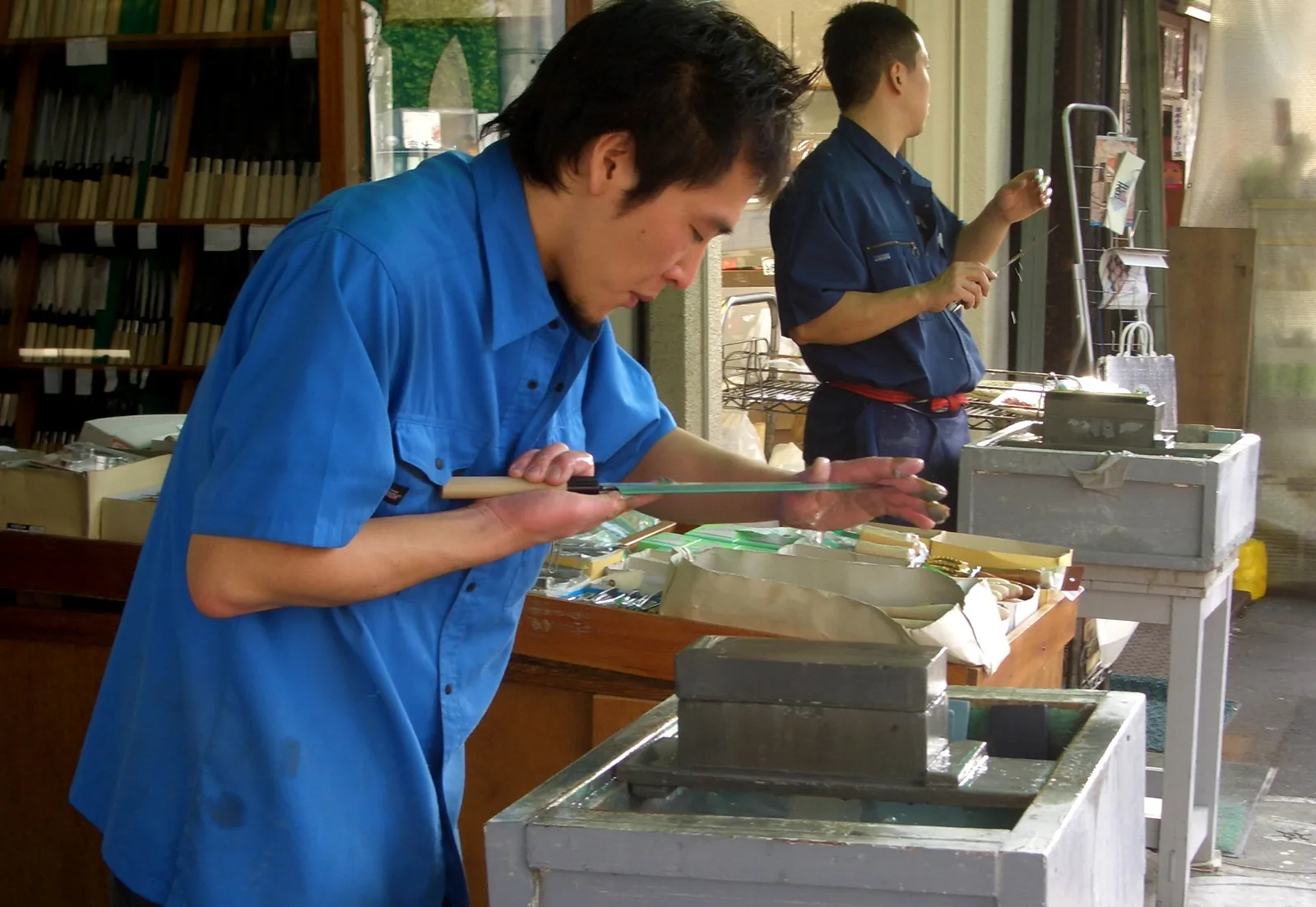
Many traditional Japanese kitchen knives are ground on one face only, which turns sharpening into a skill of its own. A cook keeps that edge with water stones, and the workshop puts one under your hands before it puts a handle in them.
Sakai, in Osaka Prefecture, has made knives since the 14th century, and Seki in Gifu Prefecture is often called the home of modern Japanese cutlery. The workshop sits in Tokyo, but the tradition it teaches belongs to towns like those.
You start with tea or juice and a short talk from a Japanese master on the history of knives and swords. Bilingual crew then stay beside you as you work, correcting your strokes and answering questions about the blade.
A standard multi-purpose knife you finished with your own hands, your name or a sakura leaf engraved on the handle, gift packaging and a custom key-holder. It is a souvenir that can be used in a kitchen every week.
On the bench
The pieces of the session, and what sits outside it.
A standard multi-purpose knife comes with the ticket. Larger shapes such as usuba, deba and petit yanagiba cost extra.
Japanese water stones use water as the lubricant, and their grits run from coarse stones that set an edge to fine ones that polish it.
A light haori, a jacket in the style of a kimono, keeps stains off your clothes. The name badge is written in Japanese letters.
Tea or juice to begin, a range of soft drinks, then Japanese snacks and tea at the end. Meals are not included, and alcohol is not allowed.
Sakura leaves or your name in Japanese letters, or a picture of your own, cut into the handle before it is fitted.
Anyone who comes along to observe rather than take part pays an observation fee on site.
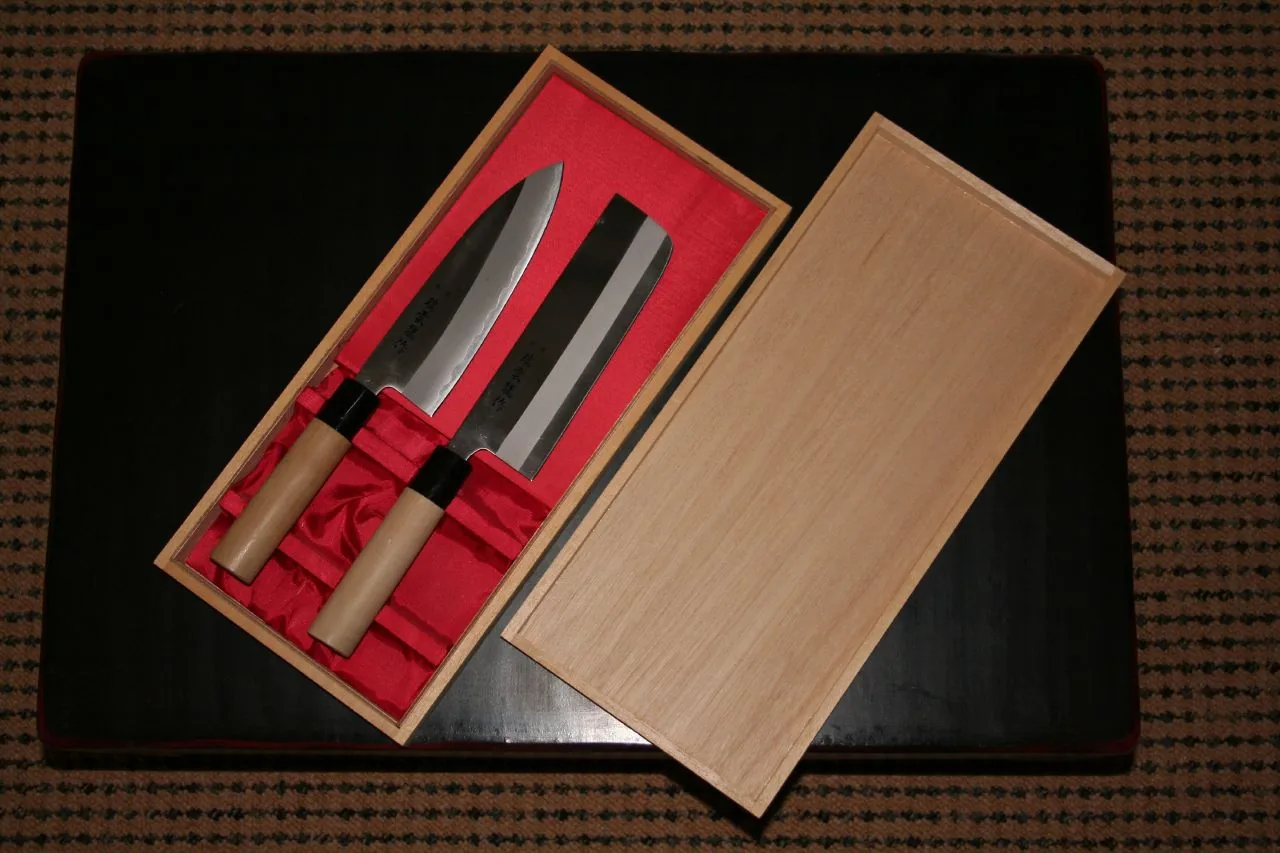
The craft in pictures
Photographs of the craft by other people, to show what the work looks like rather than the workshop room.
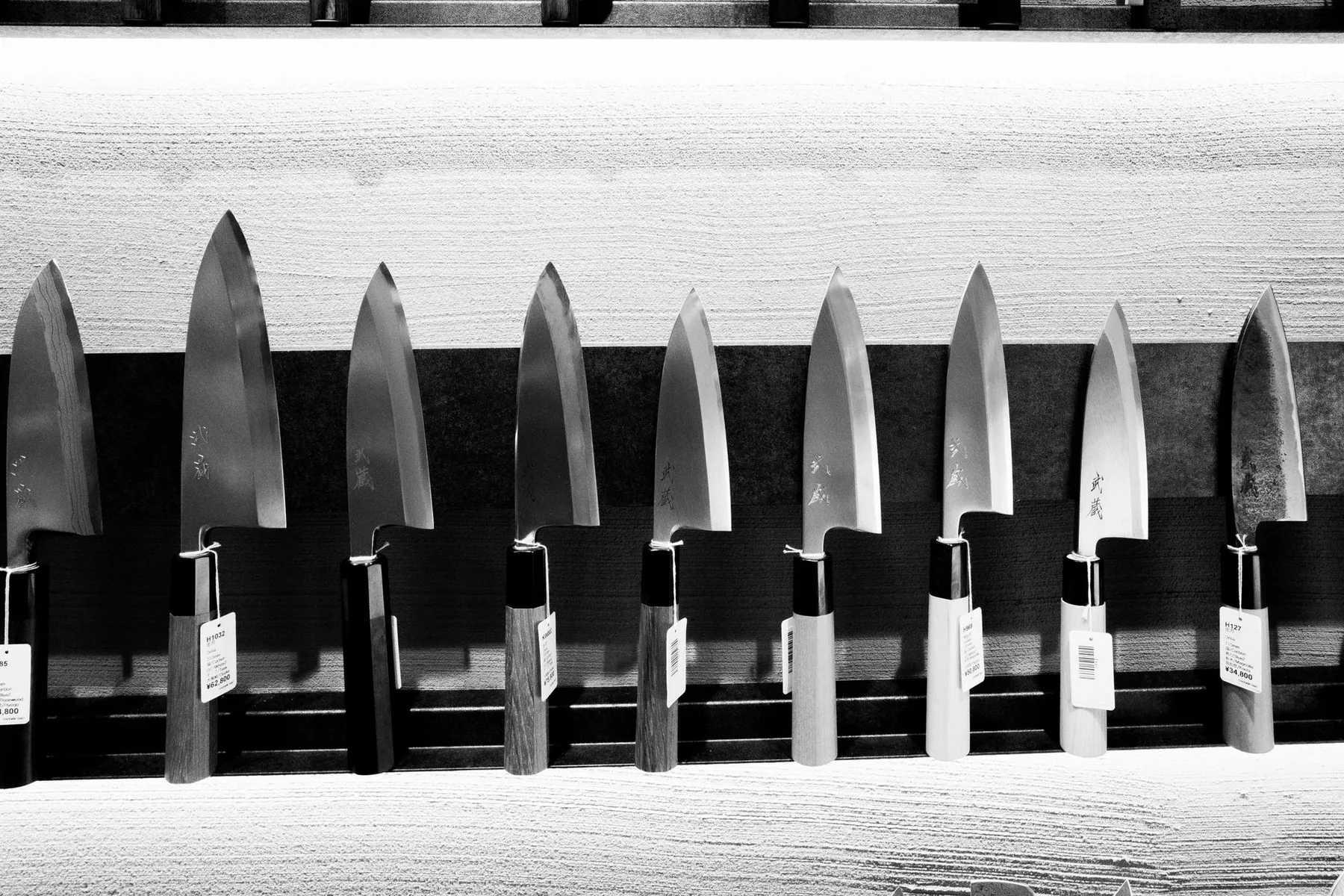
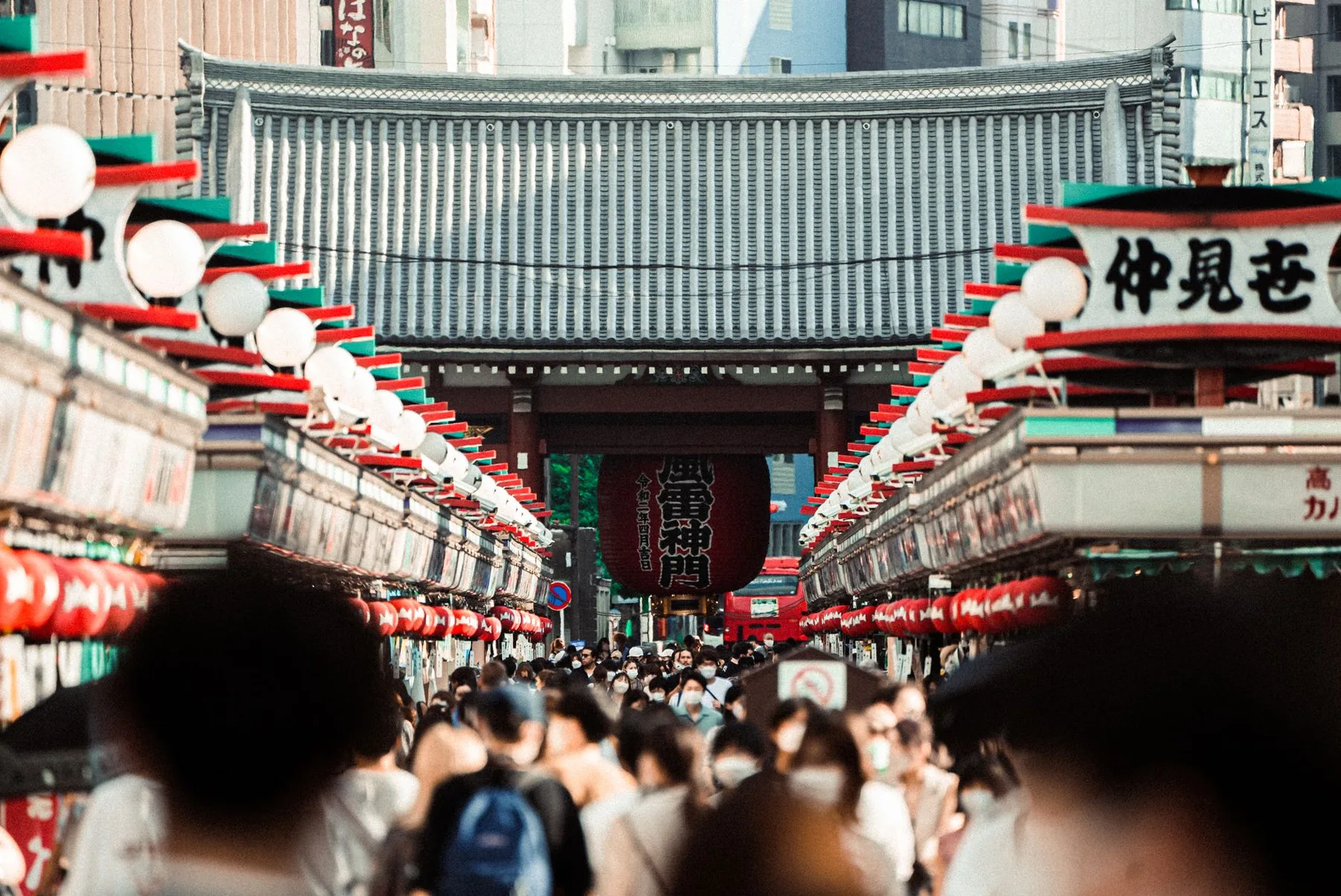
Which one
| Option | What it covers | Who it suits |
|---|---|---|
| Knife-making workshop | About 1.5 hours: choose a blade, sharpen it, engrave the handle and take home a standard multi-purpose knife in gift packaging with a custom key-holder. Larger knife types cost extra. | First-timers who want a finished, engraved knife as a souvenir. |
| Knife craft and sharpening in Asakusa | A 40-minute whetstone session with local instructors in a traditional Asakusa workshop, covering blade angles, stone use and upkeep. A knife blade and handle are included; engraving and some handle and knife types cost more, and payment is cashless. | Visitors short on time who want to learn how to keep an edge. |
| Samurai sword lesson and museum tour | A two-hour lesson with an iaito, a practice sword made so it cannot take a sharp edge, in a hakama and armour, then a guided tour of the Samurai and Ninja Museum with themed photos. | Families and anyone drawn to swords and samurai history; children under 10 cannot enter. |
Three blades, three sessions
The knife-making workshop, a short whetstone lesson in Asakusa and a samurai sword lesson with a museum visit. Each one opens its own page on GetYourGuide, and below them are more ideas for your days in Tokyo.
About 1.5 hours: choose a blade, sharpen it, engrave the handle and take home a standard multi-purpose knife in gift packaging with a custom key-holder. Larger knife types cost extra.
See open dates ↗A 40-minute whetstone session with local instructors in a traditional Asakusa workshop, covering blade angles, stone use and upkeep. A knife blade and handle are included; engraving and some handle and knife types cost more, and payment is cashless.
See open dates ↗A two-hour lesson with an iaito, a practice sword made so it cannot take a sharp edge, in a hakama and armour, then a guided tour of the Samurai and Ninja Museum with themed photos.
See open dates ↗More to do in Tokyo
Practical notes
The workshop runs about 1.5 hours, and starting times show once you check availability. Two meeting points are offered depending on the option you pick, so read your voucher for the address. The provider also runs the workshop in Osaka, so make sure the option you choose says Tokyo.
The included knife is the standard multi-purpose size. Larger types, such as usuba, deba and petit yanagiba, cost extra, and anyone coming only to watch pays an observation fee on site.
Instruction is in English, with bilingual staff who adapt their explanations to your level of English.
No experience is needed, and the workshop suits beginners. It is wheelchair accessible and reachable by public transport.
Put the boxed knife in checked luggage, never in carry-on. The team can also show you how to ship it.
Alcohol and drugs are not allowed. If you have trouble finding the place, contact the provider using the details on your booking.
Notes from a Tokyo cook who collects Sakai blades
Each stage of the roughly 90-minute session, with a note for each.
Read the note → the bladeWhat the types are for, and what is included in the ticket.
Read the note → the stoneHow water stones work and what the workshop asks of you.
Read the note → the engravingWhat you can cut into the handle and who helps you.
Read the note → going homeHow the knife is packed and where it travels on the flight.
Read the note → backgroundSingle-bevel and double-bevel blades, the steels and the towns behind them.
Read the note →FAQ
You finish a standard multi-purpose knife: choose the blade type, sharpen it on a whetstone, engrave the handle and fit it with a traditional hammer. It goes home in gift packaging, with a custom key-holder as a present.
No. Put the boxed knife in checked luggage, never carry-on. The team can also show you how to ship it home.
Larger knife types, such as usuba, deba and petit yanagiba, cost more than the included standard knife, so choose before the sharpening starts. Anyone who comes only to watch pays an observation fee on site.
None. The workshop welcomes beginners, and the crew correct your movements and give personal advice as you go.
Tea or juice, a range of soft drinks and Japanese snacks are included. Meals are not, and alcohol is not allowed.
Yes. Several English-speaking crew work beside you, and bilingual staff adapt the explanations to your level.
You can cancel free of charge up to 24 hours before the session, and you can also reserve now and settle the bill later.
That session runs about 40 minutes and centres on whetstone sharpening, with local instructors explaining angles and upkeep. Guests mention that engraving and some handle and knife types cost extra there, and the workshop takes cashless payment only.
Prices change with the date and the size of your group. GetYourGuide shows them in your own currency, with the full total before you confirm.